
Views: 0 Author: Site Editor Publish Time: 2025-09-16 Origin: Site

Automated extrusion plays a crucial role in modern PVC tube production by streamlining operations, improving consistency, and reducing labor costs. The PVC Tube Extruding Machine with an auto feeder enhances efficiency by maintaining a steady feed of raw material, ensuring precise melting, and producing uniform tubes with minimal human intervention.
This article aims to highlight the key specifications and performance indicators of auto feeder extruding machines, helping manufacturers choose the right equipment to meet production needs, maintain product quality, and optimize operational efficiency.
An Auto Feeder Extruding Machine is a specialized PVC tube production system that combines a conventional extruder with an automated feeding system. This setup enables continuous and uniform extrusion, reducing manual intervention and ensuring stable material flow. It is widely used in modern manufacturing lines to improve efficiency, maintain tube quality, and meet high-volume production demands.
Extruder
Melts and homogenizes the PVC material for smooth, consistent extrusion.
Optimized screw design ensures proper material flow and thermal control.
Mold Head
Shapes the molten PVC into tubes of precise diameter and wall thickness.
Adjustable molds allow production of multiple tube sizes on the same machine.
Auto Feeder
Automatically delivers raw PVC pellets to the extruder at a consistent feed rate.
Reduces labor, prevents material interruption, and maintains stable production quality.
Cooling System
Often consists of stainless steel or water-cooling tanks.
Rapidly solidifies the extruded tube while maintaining roundness and surface smoothness.
Cutting Unit
Automatically cuts the continuous tube into the desired lengths.
Can be integrated with PLC control for precise synchronization with extrusion speed.
Reduced Manual Labor: Automation minimizes the need for constant human supervision.
Consistent Feed Rate: Ensures stable extrusion, reducing defects and material waste.
Improved Product Uniformity: Produces tubes with precise dimensions and smooth surfaces, enhancing downstream processing efficiency.
Production efficiency measures how much PVC tube can be produced within a specific time frame, typically expressed as output per hour. The auto feeder system ensures a consistent and continuous supply of raw material to the extruder, minimizing interruptions and maintaining a steady extrusion process. High production efficiency not only reduces operational costs but also maximizes throughput, making it ideal for medium-to-large scale manufacturing lines. Efficient production also supports better coordination with downstream processes such as cutting, cooling, and packaging, ensuring smooth overall workflow.
Dimensional accuracy evaluates the precision of the extruded tube, including outer diameter, inner diameter, and wall thickness. Maintaining tight tolerances is critical to prevent defects, reduce material waste, and ensure that the tubes meet required specifications for downstream applications such as plumbing, electrical conduits, and medical tubing. Features such as adjustable mold heads, precise temperature control, and synchronized cutting systems contribute to consistent dimensional accuracy, ensuring high-quality production even over long operational periods.
Energy efficiency monitors the motor power consumption and overall extruder performance in relation to the production output. Using energy-efficient extruders helps reduce electricity costs, lower the environmental footprint, and maintain consistent extrusion quality. Proper screw design, optimized heating zones, and synchronized auto feeder operation enhance energy utilization while ensuring that PVC material is processed evenly, reducing waste and improving cost-effectiveness.
Operational reliability assesses factors such as downtime, maintenance frequency, and ease of operation. A reliable machine ensures continuous production, minimizes unplanned stoppages, and extends the lifespan of both the extruder and auto feeder system. Features such as automated feeding, PLC integration, real-time monitoring, and easily accessible maintenance points contribute to smooth operations, reduce the risk of errors, and enhance overall user convenience. Reliable machines also provide consistent product quality, which is critical for meeting strict industrial and commercial standards.
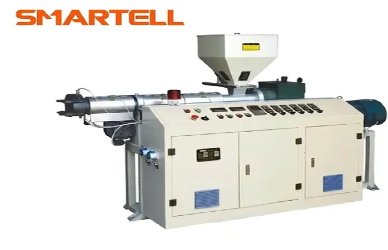
The auto feeder system ensures a steady and continuous supply of PVC raw material to the extruder, maintaining a consistent feed rate throughout the production process. This allows the machine to operate at optimal speed, significantly increasing production output while minimizing interruptions. At the same time, it guarantees uniform tube dimensions, smooth surface quality, and reduced defects, which is particularly critical for applications such as plumbing, electrical conduits, and medical tubing. Consistent output also supports downstream operations like cutting, packaging, and quality inspection, further improving overall production efficiency.
By automating the feeding process, the machine minimizes manual intervention, effectively reducing labor costs and decreasing the risk of human errors that can cause production delays or inconsistencies. Operators can focus on monitoring system performance and product quality rather than manually feeding material, leading to more reliable and streamlined production lines. This not only saves time but also helps maintain consistent production quality over extended runs, which is essential for high-volume manufacturing environments.
Many auto feeder extruding machines feature adjustable molds and flexible screw configurations, making them compatible with a wide range of PVC tube diameters and wall thicknesses. This flexibility allows manufacturers to switch between different tube specifications quickly and efficiently, without significant downtime or the need for extensive machine adjustments. The ability to produce multiple tube types on a single production line enhances operational versatility, meeting diverse market demands while optimizing the use of equipment and resources.
When choosing an auto feeder extruder, it is essential to evaluate the required output per hour or per day according to your production goals. The extruder and its automated feeding system must be capable of handling the desired PVC volume consistently, while maintaining a stable feed rate and uniform tube quality. Selecting a machine with appropriate capacity ensures efficient production without overloading the system, preventing excessive wear and potential downtime.
Both the initial investment and long-term operational costs should be carefully considered. Operational costs include energy consumption, labor, and maintenance expenses. Auto feeder extruders typically reduce labor requirements and improve production efficiency, but higher-capacity or more advanced models may come with a larger upfront investment. Balancing cost and productivity is key to achieving a high return on investment.
Ease of maintenance and the availability of spare parts are critical for long-term reliability. Machines with accessible components, standardized parts, and responsive local support reduce downtime and ensure consistent production quality. Implementing regular preventive maintenance schedules further prolongs the lifespan of both the extruder and the auto feeder system, minimizing unexpected interruptions.
An effective auto feeder extruder should be able to seamlessly integrate with cooling tanks, cutting units, and packaging systems. Proper integration ensures a smooth workflow, reduces manual handling, and allows for continuous, high-quality production. Additionally, well-coordinated systems help maintain product consistency, improve operational efficiency, and facilitate scalable production as demands grow.
Auto feeder extruding machines play a vital role in modern PVC tube manufacturing, providing continuous, efficient, and precise production. By combining automated feeding with specialized extrusion and mold systems, these machines enhance productivity, ensure uniform tube quality, and reduce labor costs.
When selecting an auto feeder extruder, manufacturers should consider production capacity, operational costs, maintenance needs, and integration with downstream systems. Choosing the right machine based on specific production requirements helps maximize return on investment (ROI) while maintaining consistent product quality and operational efficiency.