
Views: 0 Author: Site Editor Publish Time: 2026-08-13 Origin: Site

High-volume disposable medical device manufacturers face a monumental challenge today. They must balance massive production throughput while guaranteeing stringent zero-defect sterility. Global supply chains demand extreme efficiency. Hospitals consume millions of disposable plastics daily. Syringes and IV sets rely heavily on heat-sensitive polymers. These devices feature complex, extremely narrow lumens. These unique geometries make alternative sterilization methods structurally destructive. They also render other methods largely ineffective.
High-temperature steam easily melts delicate plastics. It exceeds the glass transition temperature of most medical polymers. Gamma radiation often causes severe polymer embrittlement. Free radicals break molecular bonds during radiation exposure. This renders the final product brittle and unsafe for patient use. This guide empowers factory procurement teams and QA directors. We provide you an objective, compliance-focused framework. It helps you accurately evaluate and source an industrial-scale ETO sterilization machine. You will learn about core hardware requirements. We explore crucial regulatory standards and facility safety planning. Our insights ensure you deploy safe, scalable, and fully validated manufacturing processes.
An effective syringe sterilization machine must guarantee deep gas penetration into narrow, long lumens without degrading PVC, PE, or PP materials.
Industrial evaluation should prioritize chambers that offer precise, automated control over the four critical interdependent parameters: gas concentration, temperature, relative humidity, and exposure time.
Compliance is non-negotiable; shortlisted equipment must possess the data-logging and control mechanisms required to validate cycles according to ANSI AAMI ISO 11135.
Facility planning must account for significant infrastructure, including dedicated exhaust systems, emission abatement technologies (targeting 99.9% destruction), and post-cycle aeration zones to meet ISO 10993-7 residue limits.
Polymers dictate your sterilization choices heavily. Manufacturers construct syringes and IV tubing using PVC, Polypropylene, and Polycarbonate. These materials restrict your available sterilization options. Gamma radiation actively breaks down polymer chains. This causes dangerous embrittlement and unwanted discoloration. High-temperature steam melts or severely deforms plastic components. Ethylene oxide remains the optimal industrial solution. It protects delicate material integrity while ensuring absolute sterility.
The lumen challenge demands superior gas penetration. Syringes and IV tubing contain incredibly narrow, long pathways. Surface-level sterilants cannot reach these hidden micro-environments. Ethylene oxide utilizes a powerful alkylation mechanism. Gas molecules penetrate deep into the device structure. They replace hydrogen atoms with alkyl groups on microbial DNA. This disrupts the replication of lingering microorganisms. The gas easily passes through multi-layered blister packaging. This precise mechanism ensures a 10⁻⁶ Sterility Assurance Level (SAL). Other methods routinely fail to meet this standard.
Scalability drives high-volume medical outputs. Factories demand continuous, uninterrupted throughput. Commercial medical device sterilization equipment processes entire pallets simultaneously. You can load thousands of packaged goods directly into the chamber. This aligns perfectly with modern batch-production rhythms. It prevents frustrating supply chain bottlenecks. You keep your factory running at maximum efficiency. You deliver life-saving tools without delay.
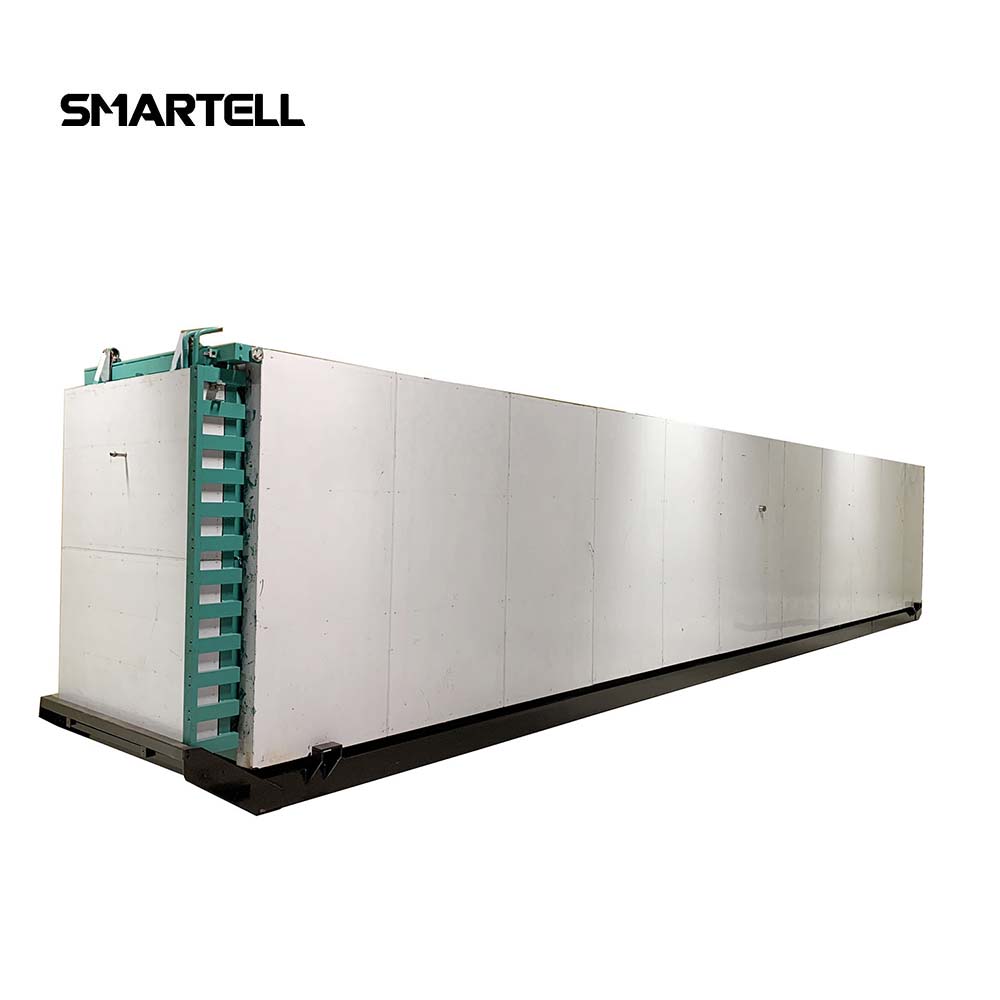
Calculating chamber volume serves as your primary step. You must accurately match equipment size to your daily factory output. Packaging density significantly impacts overall cycle efficiency. Pallet dimensions directly determine gas diffusion rates inside the unit. Overpacked chambers restrict necessary gas flow. You need precise volume calculations to avoid partial batch failures.
You must evaluate precision control capabilities carefully. Four critical interdependent parameters govern cycle success. These include gas concentration, temperature, relative humidity, and exposure time. Automated PLC systems manage these delicate variables using complex PID loops.
Temperature (37-63°C) and Humidity (40-80%): Automated systems must pre-condition the loaded batch. Uniform moisture facilitates deeper gas penetration. Dry microbial spores resist alkylation strongly. You must inject steam carefully. Nitrogen blanketing is often utilized to reduce flammability.
Gas Concentration and Vacuum Depth: You need robust, high-quality pump systems. They pull reliable vacuums continuously. Deep vacuum pulsation forces gas deep into narrow IV tubing. Precise control prevents sterile barrier packaging from bursting prematurely.
Consider integrated versus separate processing phases carefully. An EO sterilization chamber can operate as an all-in-one unit. It handles pre-conditioning, active sterilization, and final aeration seamlessly. This approach saves valuable factory floor space. It requires less material handling by your operators.
Modular setups separate these distinct phases. Ultra-high-volume manufacturing often benefits immensely from modularity. You move pallets from pre-conditioning rooms into the main chamber. You then transfer them to dedicated aeration cells. This strategy increases overall factory throughput exponentially. It keeps your main chamber actively sterilizing at all times. This maximizes your capital equipment usage.
Compliance requires strict adherence to international standards. You must validate your process completely to ISO 11135. Your machine needs granular, unalterable digital batch records. Software must comply with 21 CFR Part 11 guidelines. Unalterable logs must securely track temperature mapping and internal pressure. This exact documentation passes tough regulatory audits. It supports the necessary use of B. atrophaeus biological indicators. You place these resistant spores in a Process Challenge Device. This proves your cycle achieved total lethality in the hardest-to-reach locations.
Provide comprehensive temperature mapping across the entire chamber.
Maintain secure pressure logs preventing unauthorized data manipulation.
Support standardized biological indicator placement tracking.
Ensure electronic signatures authenticate every batch report.
Residue management ensures ultimate patient safety. You must meet ISO 10993-7 residue limits strictly. Regulators categorize syringes and IV sets based on patient contact. We must monitor daily limits for EtO and Ethylene Chlorohydrin (ECH) residues. Laboratories utilize gas chromatography to analyze ECH levels. This ensures no toxic compounds reach the patient.
Evaluate aeration capabilities very carefully. Heated, forced-air cycles actively accelerate off-gassing. This greatly reduces inventory hold times. You can cut waiting periods from several weeks to mere days. Fast aeration improves your factory turnover rate. It prevents massive inventory backlogs in your warehouse.
| Device Exposure Category | Contact Duration | Residue Limit Focus |
|---|---|---|
| Limited Exposure | Under 24 hours | Strict average daily dose limits apply to prevent acute toxicity. |
| Prolonged Exposure | 24 hours to 30 days | Focuses on both daily averages and maximum monthly totals. |
| Permanent Contact | Exceeding 30 days | Requires lifetime dose tracking and extremely low daily averages. |
Real-world installation demands extremely careful planning. Physical footprints require strict operational clearances. You must maintain 51cm minimum perimeters around the unit. This specific space ensures proper maintenance access for technicians. Heavy chambers demand structural floor reinforcement. Do not underestimate total equipment weight when fully loaded. Dynamic floor loading limits must be calculated by structural engineers.
Ventilation systems prevent hazardous gas buildup. You need isolated, spark-proof environments. Class I, Division 1 electrical ratings are often mandatory. You must install continuous LEL (Lower Explosive Limit) monitors. Environmental controls remain absolutely critical. You must install independent, dedicated exhaust piping. Keep this completely separated from the factory's primary HVAC system. Conduct thorough wind flow analysis for the exhaust release. This separation prevents dangerous cross-contamination into employee workspaces.
Emission abatement technology protects the surrounding environment. The EPA and NESHAP enforce increasingly strict regulations. Your chosen ethylene oxide sterilizer must integrate seamlessly. Pair it with modern catalytic oxidizers or wet scrubbers. Catalytic oxidizers successfully convert residual gas into harmless carbon dioxide and water vapor. You should target a 99.9% or higher destruction efficiency. This high standard guarantees long-term operational continuity. It prevents unexpected facility shutdowns due to local air quality violations.
Maintenance directly drives your operational reliability. You must prioritize vendors offering robust preventative maintenance schedules. Spare parts availability remains absolutely crucial. Ensure you can easily source replacement valves, vacuum pumps, and sensors. Emergency technical support prevents catastrophic factory downtime. Select manufacturing partners demonstrating proven, rapid response times. Delays in sensor recalibration halt entire production lines. You need technicians who understand complex PLC troubleshooting.
Procurement requires actionable, documented next steps. Request detailed cycle time estimates first. Base these calculations on your specific packaging load configuration. Never accept generic timeline estimates. They rarely reflect real-world factory physics. Dense blister packs behave differently than loose bulk pouches.
Demand documented Factory Acceptance Testing (FAT). They must simulate your exact load density during testing. Thoroughly review Site Acceptance Testing (SAT) protocols from the equipment manufacturer. These official documents verify machine performance before full installation. They protect your project timeline. They ensure the machine passes all local regulatory inspections.
| Evaluation Area | Minimum Standard | Ideal Capability |
|---|---|---|
| Maintenance Support | Standard warranty and manual. | 24/7 technical support and local replacement part depots. |
| Testing Protocols | Basic FAT documentation. | Comprehensive FAT and SAT with physical load simulation. |
| System Integration | Compatible with basic scrubbers. | Seamless integration yielding over 99.9% abatement efficiency. |
| Software Compliance | Basic digital data logging. | Full 21 CFR Part 11 compliant electronic signatures. |
Purchasing an IV set sterilizer or a syringe sterilization machine goes far beyond simple hardware acquisition. You actively integrate a highly regulated, safety-critical process into your manufacturing line. The right machine perfectly balances maximum batch throughput. It delivers absolute verifiable compliance to ISO 11135 and ISO 10993-7. It guarantees operator safety continuously. Strategic equipment selection protects your brand reputation.
We advise decision-makers to act collaboratively. Consult your environmental engineers carefully. Engage your regulatory affairs teams early. Do this before finalizing your exact chamber size. Their input ensures your abatement specifications meet future regulatory demands. It streamlines the complex validation journey. Take these crucial steps to safeguard your facility. You will consistently deliver safe, sterile products to vulnerable patients.
A: A typical cycle spans 5 stages. These include pre-conditioning, gas introduction, exposure, aeration, and validation. While actual gas exposure takes only 1 to 6 hours, mandatory aeration extends the timeline. Total cycle times often reach 12 to 24 hours. The specific polymer density and aeration temperature determine the final duration.
A: Yes, you can sterilize other devices. The materials must remain highly compatible. They should tolerate gas without degrading. You must independently validate the specific load configuration. This verifies gas penetration and proves residue limits are safe. Processing mixed loads requires distinct, rigorous validation protocols to ensure safety.
A: Your packaging must feature a breathable sterile barrier. Manufacturers commonly use medical-grade Tyvek or specialized porous paper. This breathable material allows essential gas ingress. It also facilitates critical outgassing during the aeration phase. Simultaneously, it effectively prevents microbial contamination after the cycle finishes.