
Views: 0 Author: Site Editor Publish Time: 2026-07-30 Origin: Site

Medical device manufacturing operates under extreme stakes. Illegible graduations or poor ink adhesion can easily trigger regulatory failures or compromise patient safety. Manufacturers simply cannot afford errors when producing vital clinical tools. Scaling your production across varying syringe sizes presents a unique challenge. A delicate 1ml barrel handles much differently than a bulky 50ml barrel. Production lines require equipment balancing rapid size changeovers alongside absolute print precision. We created this guide to help you navigate these complex equipment choices. It provides a vendor-neutral, engineering-focused framework. You will learn how to evaluate, shortlist, and successfully implement the right printing hardware. Readers will discover mechanical benchmarks, cleanroom standards, and hidden operational risks to watch out for.
Precision is Non-Negotiable: Syringe graduation printing requires strict tolerances; closed-cup pad printing systems offer the highest consistency.
Size Flexibility Matters: The jump from 1ml to 50ml barrels necessitates quick-release fixtures and programmable stroke depths to minimize downtime.
Throughput Dictates Technology: High-volume output relies on rotary pad printing, while modular linear systems suit variable, lower-volume runs.
Compliance is Integrated: Equipment must support medical-grade, USP Class VI compliant inks and cleanroom-ready operation (e.g., automated UV curing, minimal solvent emissions).
Many facility managers weigh different printing methods. Process comparison reveals distinct operational differences. Pad printing uses a soft silicone pad. It picks up ink from an etched plate. It then transfers this ink directly to the substrate. Rotary screen printing instead pushes ink through a woven mesh cylinder. You will find pad transfer far more adaptable for medical devices.
Consider curvature and substrate adaptation. Medical syringes feature varying convex curves. These curves change drastically across sizes. Pad printing easily wraps around these complex shapes. The silicone pad flexes smoothly over a tiny 1ml barrel. It also adapts effortlessly to a wider 50ml barrel. Screen printing often struggles to maintain uniform contact on extreme tapers.
Detail resolution plays a massive role in device safety. You must print critical micro-graduations accurately. Fine line weights define reading accuracy. Pad printing holds microscopic details flawlessly. Screen mesh limitations often cause jagged edges on very thin lines. You need crisp, sharp numbers. Pad technology delivers this clarity consistently.
Finally, look at the operational footprint. Floor space matters immensely in controlled environments. Pad machines typically require smaller footprints. They also consume less ink. This efficiency simplifies your cleanroom layout. It keeps your operation leaner. We highly recommend evaluating these footprint differences early on. You want a process optimizing both space and consumable usage. When setting up a line for reliable syringe barrel marking, the silicone transfer method generally wins out.
| Comparison Feature | Pad Printing | Rotary Screen Printing |
|---|---|---|
| Substrate Adaptation | Excellent on varying convex curves and deep tapers. | Struggles on extreme tapers; best for uniform cylinders. |
| Detail Resolution | Superior holding of micro-graduations and fine lines. | Moderate; mesh limitations can cause jagged edges. |
| Ink Consumption | Low ink usage; sealed cups prevent evaporation. | Higher ink usage; open mesh increases waste. |
| Cleanroom Footprint | Compact and easy to enclose. | Often requires a larger operational footprint. |
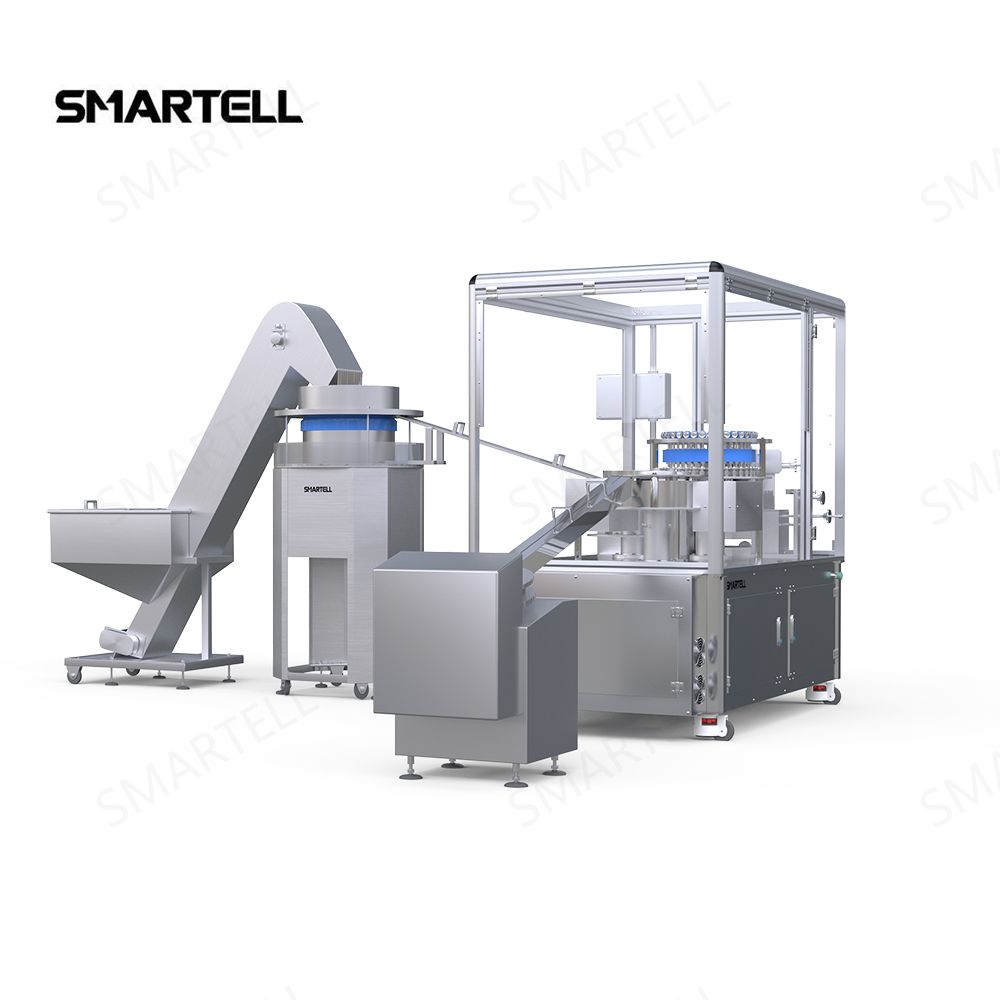
Production scale dictates your equipment choices. You must define the exact production threshold requiring an upgrade. Semi-automatic linear machines handle lower volumes well. They offer excellent modularity. However, as demand grows, continuous operations become necessary. Upgrading to continuous rotary pad printing maximizes your output. It eliminates bottlenecks found in step-by-step linear feeding.
You need realistic cycles-per-minute (CPM) benchmarks. Linear configurations usually output between 60 and 120 CPM. They work perfectly for variable batch runs. Rotary configurations change the game entirely. A robust rotary machine achieves 250 to over 400 CPM. This massive throughput leap justifies the transition. Evaluate your current volume. Anticipate future scale. Choose the technology matching your true throughput ceiling.
Exact registration determines device safety. Syringe graduation printing demands strict mechanical requirements. Servo-driven indexing provides pinpoint accuracy. It rotates the barrel exactly as programmed. Optical vision alignment systems add another vital security layer. Cameras inspect the orientation before printing begins. They ensure the artwork aligns perfectly alongside existing molded marks.
Preventing print distortion presents another engineering hurdle. Extreme tapers on small 1ml barrels behave differently than straight-walled 50ml barrels. Small barrels require delicate pad pressure. Large barrels need broader contact areas. Programmable stroke depths solve this issue. The machine adjusts the pad impact based on the barrel's exact geometry. This guarantees clear, undistorted lines across all formats.
Frequent batch switching introduces operational drag. You must identify the primary friction points. Fixture swapping, pad replacement, and PLC recipe adjustments consume valuable time. Changing from a 1ml setup to a 50ml setup can cripple daily output if handled poorly. Manufacturers need streamlined protocols.
Establish a strict baseline for acceptable changeover times. Your team should target under 15 minutes per size swap. Specific hardware enables this speed. Tool-less locking mechanisms let operators swap fixtures instantly. Quick-release pad holders eliminate the need for wrenches. Pre-programmed HMI recipes instantly recall stroke depths and indexing speeds. These features collectively minimize costly downtime.
Medical manufacturing mandates strict environmental control. Equipment must meet ISO-certified cleanroom standards. Outline specific hardware requirements early in your procurement process. Stainless steel construction prevents rust. Enclosed pneumatics keep exhaust air from contaminating the sterile room. Advanced particulate control systems actively sweep away dust generated during mechanical movement.
Furthermore, consider ink curing integration. You must utilize medical-grade UV/LED curing systems. These integrated lamps cure the ink immediately upon transfer. Immediate curing ensures non-toxic ink adhesion. It prevents smearing as the syringe moves down the line. Compliance is never an afterthought. Your hardware must support these stringent medical protocols natively.
Equipment specs only tell part of the story. Real-world implementation uncovers hidden operational risks. Substrate pre-treatment failures represent a massive vulnerability. Syringes mostly utilize Polypropylene (PP) or Polyethylene (PE). These plastics possess low surface energy. Ink naturally repels from them. You must apply corona or flame treatment prior to printing. This treatment alters the surface tension. It ensures permanent ink adhesion. Skipping this step risks massive regulatory failures. We constantly see manufacturers skip pre-treatment to save time. This common mistake leads to entire batches failing standard tape tests.
Ink evaporation drastically affects quality over long shifts. Open-inkwell systems expose solvents to ambient air. Solvents evaporate quickly over an 8-hour shift. This evaporation thickens the ink. It alters the opacity and transfer quality. Sealed ink cups eliminate this specific risk entirely. They trap solvents inside the cup. Viscosity remains perfectly stable. The print opacity stays uniform from morning until night. We strongly advise utilizing sealed cup systems for any continuous medical pad printing operation.
Finally, respect the operator learning curve. Buying advanced hardware solves only half the problem. Operators face a steep learning curve daily. They must learn to dial in precise pad pressure. They must mix exact ink-to-thinner ratios. Look for highly intuitive equipment. HMI-driven touchscreens simplify this complex process. Recipe memory saves exact parameters for each syringe size. Intuitive interfaces prevent guesswork on the factory floor. They empower your team to run machines confidently and safely.
Beyond standard graduations, branding plays a crucial role. A dedicated syringe logo printer requires specific functional upgrades. We have identified three essential features separating average machines from industry leaders.
Automated Feeding & Unloading: Manual handling damages sterile products. Automated feeding systems protect delicate parts. A reliable machine utilizes centrifugal bowl feeders for smaller items. It utilizes specialized hopper systems for bulky 50ml barrels. These systems orient the barrels gently. They prevent scratching on the transparent plastic surfaces. Unloading mechanisms should neatly deposit finished barrels onto drying conveyors.
Multi-Color Capability: Many brands require dual-print capability. You might need black graduations alongside a corporate color logo. Multi-color systems handle this effortlessly. Look for independent pad stroke adjustment. This feature allows the machine to apply different pressure for different ink colors. It ensures the logo looks vibrant while the graduations remain sharply defined.
Quality Control Integration: Human inspection cannot keep up with high-speed production. Inline camera inspection systems provide mandatory quality assurance. These cameras automatically scan every printed barrel. They instantly detect misaligned artwork. They spot incomplete prints. The system automatically rejects defective barrels before packaging. This closed-loop quality control protects your brand reputation.
Selecting the right vendor requires meticulous evaluation. You are investing in a long-term production partner. When searching for a syringe pad printing machine, you must employ strict procurement logic. Always demand a Factory Acceptance Testing (FAT) protocol. Never skip the FAT. Demand a rigorous test at the vendor's facility. Bring your exact 1ml and 50ml syringe samples. Bring your specified medical inks. Run the machine at full production speed. Verify the cycle times personally. This proves the machine performs exactly as promised.
Evaluate spare parts and tooling support closely. Wear and tear happens continuously in manufacturing. You will eventually need custom silicone pads. You will need replacement holding fixtures. Ask the vendor about their lead time for these items. Long lead times cause unacceptable downtime. A responsive vendor keeps your inventory stocked. They keep your production line moving.
Lastly, scrutinize the warranty and Service Level Agreements (SLAs). Continuous manufacturing environments run constantly. You need robust, guaranteed support. Define an acceptable commercial warranty upfront. Look for at least 12 months of comprehensive coverage. Ensure the vendor offers remote diagnostic support. They should access the PLC remotely. This allows them to troubleshoot digital errors instantly without dispatching a technician.
Selecting the best machine requires careful technical alignment. The ideal equipment matches your current throughput needs flawlessly. It also provides the critical flexibility to handle the full 1ml to 50ml spectrum. Precision remains your absolute top priority. Ensure you prioritize cleanroom compatibility and medical-grade standards. Avoid taking shortcuts on substrate pre-treatment. Choose intuitive machines minimizing operator errors.
Now is the time to take decisive action. We encourage procurement and engineering teams to engage vendors directly. Request a sample print run using your exact syringe barrels. Schedule a technical consultation to validate cycle times. Comparing real-world test results gives you ultimate confidence. Armed with this framework, you can deploy a reliable, high-speed printing solution effortlessly.
A: Modern servo-driven machines can achieve this switch in 10 to 20 minutes. The process involves a quick pad swap, changing the holding fixture, and selecting the new HMI recipe. Tool-less locking mechanisms drastically reduce the time required to lock these physical components into place.
A: You must use USP Class VI, biocompatible inks. These inks must withstand harsh sterilization processes like autoclave, gamma radiation, or Ethylene Oxide (EtO). Manufacturers typically rely on UV-curable inks or highly durable two-component epoxies to guarantee patient safety and permanent adhesion.
A: Yes, multi-station rotary systems handle this easily. The machine indexes the barrel precisely to different printing stations. It applies the graduation markings and the corporate logo in a single, high-speed pass. This eliminates the need for secondary processing.