
Views: 0 Author: Site Editor Publish Time: 2026-08-18 Origin: Site

Producing 1ml insulin syringes demands flawless engineering. A single microscopic defect can trigger entire lot rejections. Such failures cost manufacturers valuable time and ruin compliance standing. Moving from manual processes to a fully automated setup changes your operational landscape entirely. You must carefully balance initial capital expenditure against Overall Equipment Effectiveness (OEE). Selecting the right equipment goes far beyond looking at theoretical output speeds. It requires a rigorous, detailed assessment of the entire system. You must scrutinize part feeding stability and siliconization precision. Inline quality control and robust validation support are equally vital. This comprehensive approach ensures you achieve optimal production yields consistently. We will explore how to identify machines handling delicate components effectively. You will learn to prioritize realistic output over empty speed promises. By understanding these core modules, you can confidently invest in a reliable, medical-grade manufacturing solution.
Optimal 1ml insulin syringe machines must natively support the specific geometry of fixed-needle hubs and the standard double orange cover syringe configuration.
Siliconization accuracy and integrated vision inspection are the primary differentiators between budget equipment and medical-grade reliable automatic syringe lines.
Evaluating a vendor requires assessing their FAT/SAT (Factory/Site Acceptance Testing) protocols and cleanroom integration capabilities.
Standard Luer slip and Luer lock syringes assemble quite easily. Their interchangeable needle hubs forgive minor alignment variations. Insulin syringes present a completely different engineering challenge. They utilize a zero-dead-space design to prevent medication waste. This design requires embedding a delicate needle directly into the barrel hub. A specialized 1ml insulin syringe machine must handle this fixed-needle integration gently. Excessive force during insertion bends the cannula. Poor alignment damages the barrel tip. Your equipment must support micro-positioning to secure the needle perfectly every single time.
Many manufacturers boast about high theoretical machine speeds. They often advertise rates exceeding 400 parts per minute (PPM). However, raw speed frequently introduces instability. High-speed systems often suffer from constant micro-stoppages. Components jam in the feeder tracks. Operators must intervene, destroying your actual shift yield. You should prioritize stability over theoretical speed. A stable 250 PPM machine operating at a 99.5% yield vastly outperforms a 400 PPM machine experiencing frequent jams. Steady, uninterrupted insulin syringe production protects your margins and reduces operator fatigue.
Each syringe component requires a dedicated feeding mechanism. Precision sorting dictates the success of your automated process.
Vibratory Bowls: Tuned specifically for rigid plastic barrels and plungers. They orient parts correctly before feeding.
Centrifugal Feeders: Ideal for high-speed delivery of lightweight components without causing surface scratches.
Cap Feeders: Must accurately orient the protective caps. You need separate lanes for the top needle shield and the bottom plunger cap.
If parts feed inconsistently, the entire assembly sequence fails. You must test feeder bowls using your actual raw materials during evaluation.
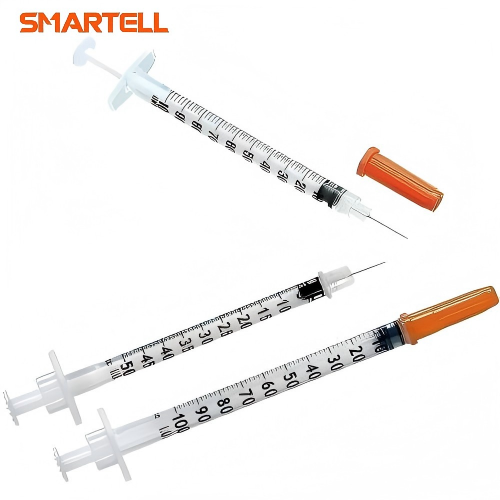
Accurate dosage relies entirely on clear, precise barrel printing. Modern equipment integrates UV or LED curing systems directly into the printing station. This instantaneous curing prevents ink smears as barrels move down the line. You must ensure the printing module maintains perfect registry. Smudged scales lead to immediate batch rejections. Quality machines inspect the print before the barrel reaches the main assembly wheel.
If your process involves inline needle gluing, consistency becomes critical. The machine dispenses a micro-drop of UV glue into the hub. It then inserts the needle. UV lamps cure the adhesive instantly. You need strict evaluation criteria here. The machine must monitor glue volume precisely. Too little glue causes needle detachment. Excess glue blocks the cannula, rendering the syringe useless.
Siliconization often acts as a critical failure point. A smooth plunger stroke determines the patient experience. Uneven silicone oil distribution causes the plunger to stall. Budget machines use simple drip methods, creating messy, uneven coats. You should insist on micro-spray nozzles. These nozzles atomize the silicone, coating the inner barrel evenly.
| Application Method | Distribution Quality | Contamination Risk | Suitability for Insulin Syringes |
|---|---|---|---|
| Mechanical Drip | Uneven, pools at the bottom | High (oil drips on outside) | Poor |
| Contact Swab | Moderate, prone to streaking | Medium (particulate shedding) | Acceptable but risky |
| Micro-Spray Atomization | Perfectly uniform micron layer | Low (highly targeted) | Excellent |
Insulin syringes traditionally use a recognizable two-cap system. Handling the double orange cover syringe components safely requires advanced mechanics. The pressing station must apply these caps without damaging the delicate needle tip. Friction during capping generates plastic particulates. High-end equipment uses frictionless pick-and-place servo robotics. They seat the caps firmly without scraping the barrel edges. This protects your cleanroom from unwanted particle generation. Integrating these features into an automatic syringe line ensures reliable capping across millions of units.
Flaw detection means nothing if it halts your workflow continuously. A premium insulin syringe assembly machine features a continuous-motion reject system. When cameras detect a defect, the machine memory tracks that specific unit. A pneumatic diverter isolates the bad syringe downstream. It ejects the flaw into a sealed bin. The main production wheel never stops spinning. This approach maintains high OEE while strictly quarantining defective units.
You cannot rely on manual sampling for zero-defect manufacturing. Automated visual inspection (AVI) acts as your primary defense.
Needle Integrity: Cameras check for sharpness, hooks, or bending defects. A bent needle causes severe patient pain.
Silicone Volume: Sensors verify the presence and correct volume of silicone oil inside the barrel.
Gasket Alignment: High-resolution cameras look for skewed rubber gaskets. They also detect trapped air gaps between the plunger and the gasket.
Cap Seating: The system ensures both orange caps sit flush against the barrel shoulders without tilt.
Regulators expect transparent, unalterable inspection records. Modern vision systems must comply with 21 CFR Part 11 requirements. The software automatically logs every accepted and rejected unit. It records timestamped images of failures. Operators require unique login credentials to alter inspection parameters. This data integrity protects you during unannounced regulatory audits.
Medical manufacturing occurs in strictly controlled environments. Your equipment must align perfectly with ISO Class 7 or Class 8 cleanroom standards. Upgrading your disposable syringe assembly requires machinery designed for easy sanitation. Look for minimal exposed cabling. Cables trap dust and complicate cleaning protocols. The machine frame should feature stainless steel construction (preferably 316L for contact parts, 304 for the frame). Sloped surfaces prevent liquid and particulate accumulation during washdowns.
Motion control defines cleanroom suitability. Historically, machines relied heavily on pneumatic cylinders. Pneumatics exhaust air, which stirs up microscopic particles. They also suffer from slight positional variations as air pressure fluctuates. Servo-driven systems solve these issues. Servos use electrical motors for exact, repeatable movements. They produce fewer particulates. They offer tighter control over pressing forces. You should heavily favor servo-driven stations for any cleanroom application.
Hardware represents only half of your purchase. The paper trail represents the other half. A credible vendor must provide exhaustive validation documentation packages. You need Installation Qualification (IQ), Operational Qualification (OQ), and Performance Qualification (PQ) protocols. These documents prove the machine operates exactly as designed under your specific facility conditions. Without them, gaining market authorization becomes almost impossible.
Smart buyers look past the sticker price. You must evaluate the long-term operational framework. Spare parts availability plays a massive role. If a proprietary sensor fails, waiting three weeks for a replacement cripples your factory. Ask vendors about their local spare parts inventory. Evaluate tooling wear-and-tear, especially inside the vibratory bowls. Component friction gradually degrades feeding tracks. Additionally, assess the machine's energy and compressed air consumption. Inefficient pneumatics drain facility resources rapidly.
Downtime hurts profitability. You must assess how quickly operators can clean the line. Tool-less changeover features define modern machinery. Operators should adjust guide rails and replace holding pucks using quick-release levers. No wrenches or screwdrivers should enter the cleanroom. Ask the vendor directly: How long does it take to clear the line and sanitize it completely? Fast turnaround keeps your equipment running profitably.
Never sign a final acceptance document based on generic videos. You must demand a rigorous Factory Acceptance Test (FAT).
Ship your actual components (barrels, plungers, needles, caps) to the vendor.
Run the machine continuously for at least 4 to 8 hours.
Force deliberate errors (e.g., upside-down caps) to test the reject system.
Verify the continuous-motion reject operates without jamming the main wheel.
Look for vendors offering robust domestic technical support. Guaranteed Service Level Agreement (SLA) response times separate reliable partners from simple equipment brokers.
Choosing the right assembly equipment completely transforms your medical manufacturing capabilities. Precision machinery mitigates severe compliance risks. It protects your operational margins through consistently high yields and drastically lower downtime. You must prioritize components handling, micro-spray siliconization, and inline vision inspection over mere theoretical speeds.
Your next step involves structured planning. Compile a comprehensive User Requirement Specification (URS). Detail your specific component dimensions perfectly. Define your cleanroom constraints and stipulate your target OEE explicitly. Armed with this URS, you can approach manufacturers confidently and secure a machine tailored exactly to your production realities.
A: Generally, it takes 4 to 8 months depending on customization, testing protocols, and vendor backlog. Complex vision systems and servo integrations often extend this timeline. Always factor FAT and SAT scheduling into your launch plan.
A: Yes, with modular change parts. However, fixed-needle versus Luer configurations require significant tooling adjustments. Due to changeover downtime, dedicated lines are often preferred for high-volume insulin production to maximize output.
A: It handles them through dedicated pick-and-place or robotic indexing stations. These servo-driven mechanisms securely seat both the top needle shield and the bottom plunger cap simultaneously or sequentially, ensuring no friction damage occurs.
A: Top-tier machines routinely operate at greater than 99% assembly yield. This metric factors out defective raw materials, measuring only the machine's ability to assemble good parts flawlessly without causing secondary damage.