
Views: 0 Author: Site Editor Publish Time: 2026-07-17 Origin: Site

Launching a scalable syringe manufacturing facility goes far beyond simply buying equipment. Moving from a preliminary feasibility study to an operational, compliant plant requires rigorous capital expenditure planning and strict regulatory alignment. Investors and operational directors face immense pressure. You must evaluate complex machinery timelines, navigate strict facility requirements, and ensure absolute safety compliance. Success relies heavily on seamless system integration, adherence to GMP guidelines, and validated quality control measures. Without these elements, production delays and regulatory rejections become massive risks for your business.
This guide outlines your technical roadmap. We will detail the essential evaluation criteria you need for sourcing, installing, and validating syringe manufacturing equipment. You will learn how to optimize workflow layouts, match machine capacities, and streamline the critical sterilization stages. Let us explore how to build a robust, high-yield facility.
Capital Allocation: The largest CAPEX goes toward high-cavitation injection molding and automated assembly equipment.
Compliance First: Facility design must begin with ISO 13485 and GMP standards in mind, specifically dictating cleanroom (ISO Class 7/8) HVAC configurations.
Sterilization Bottlenecks: EO sterilization requires dedicated infrastructure for degassing and strict safety monitoring, directly impacting production lead times.
Vendor Strategy: Selecting a unified turnkey provider often reduces integration risk and shortens the timeline to Factory Acceptance Testing (FAT).
Building a stable manufacturing flow requires understanding every phase. We must map out the exact sequence to prevent costly bottlenecks. This strategic planning ensures an efficient approach to medical syringe production. You need to align material preparation directly to packaging speeds.
Phase 1: Raw Material Preparation: Sourcing high-quality materials is your first step. You must acquire medical-grade Polypropylene (PP) for the barrels and plungers. You also need specific elastomers for the gaskets. Before entering the production stream, the plastics require thorough drying. Excess moisture causes structural defects during the molding process.
Phase 2: Component Molding: High-speed injection molding forms the core syringe components. The system creates barrels, plungers, and gaskets simultaneously in separate machines. Focus heavily on cavitation capabilities and cycle times. Faster cycle times drastically increase your daily yield.
Phase 3: Printing and Assembly: Automated systems handle barrel scale printing. You can choose offset printing or silk-screen methods. The printed barrels feed directly into the automated assembly sequence. Here, machines insert the gasket, add the plunger, and apply siliconization for smooth gliding.
Phase 4: Packaging and Sterilization: The finished syringes move into blister or ribbon packaging. Sealing them securely protects their integrity. Following packaging, they undergo terminal sterilization. The final step involves strict lot release testing before market distribution.
Evaluation Point: Identify where bottlenecks typically occur early in your planning. A common issue is a mismatch between molding cycle times and assembly line speeds. You must correctly size buffer zones to hold components if the assembly stage slows down.
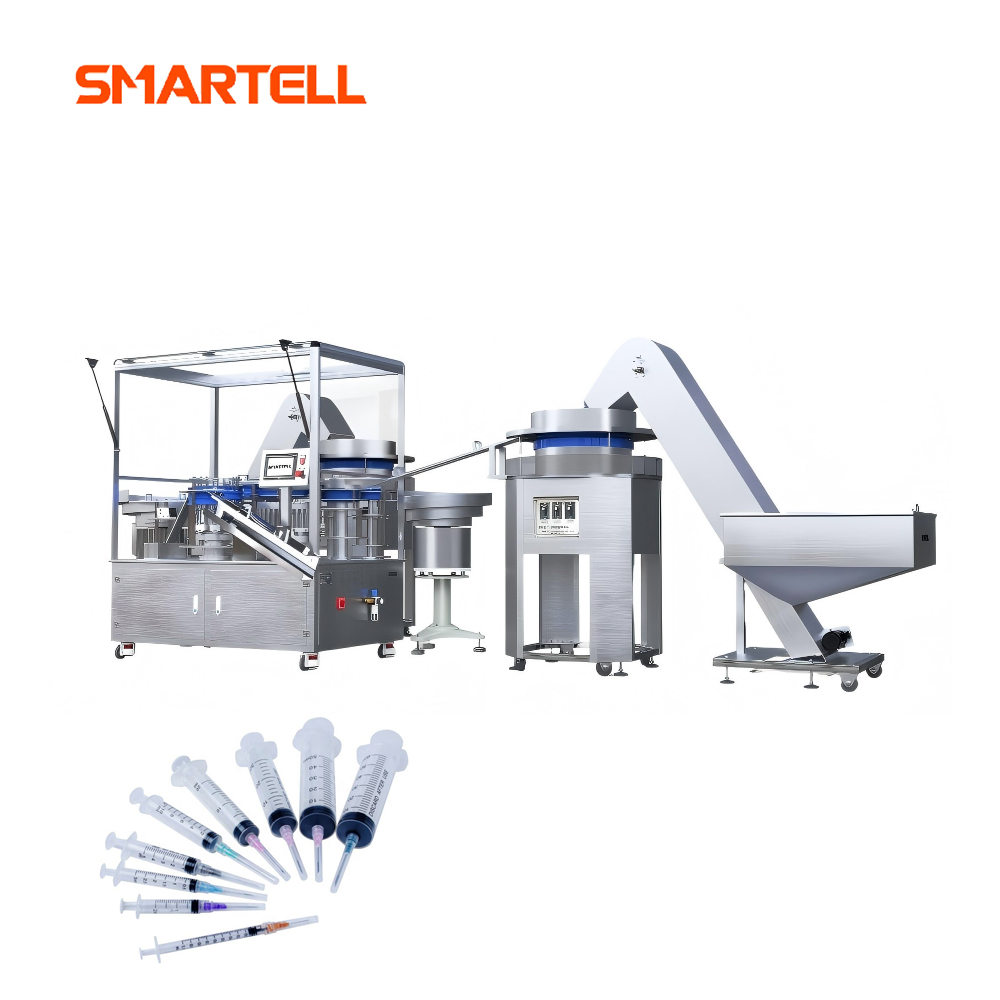
Selecting the right machinery dictates your overall operational efficiency. You cannot afford frequent downtime or high defect rates. We must evaluate each core unit carefully. Industry standards demand precision engineering.
Your primary selection criterion revolves around clamping force. Tonnage requirements must perfectly match your mold cavitation. For example, operating 32, 48, or 64-cavity molds demands substantial clamping pressure to prevent plastic flashing. High-cavitation molds require robust machines.
Risk mitigation plays a huge role in mold selection. Evaluate hot runner systems versus cold runners carefully. Hot runners keep the plastic molten inside the delivery channels. This reduces material waste significantly. They also ensure superior yield consistency across high-volume runs. A reliable syringe making machine often utilizes advanced hot runner molds.
Speed and scalability define your assembly capabilities. Assess parts-per-minute (PPM) metrics carefully before purchasing. Standard high-speed lines range from 200 to over 600 PPM. You must select a speed matching your market demand.
Quality integration is just as critical as speed. Ensure the machinery includes automated vision inspection systems. These cameras scan every unit in milliseconds. They automatically reject misaligned gaskets, missing needles, or smudged scale prints. They remove defective units before packaging begins. A modern syringe assembly line relies on these automated quality gates.
Throughput alignment prevents major staging delays. Your packaging speed must match the output of your assembly line. If packaging is slower, finished syringes pile up in buffer zones. This creates contamination risks.
Evaluate material compatibility thoroughly. Your machines must handle medical-grade dialysis paper and composite films without jamming. Clean sealing prevents premature contamination.
| Equipment Type | Key Performance Indicator | Industry Standard Expectation |
|---|---|---|
| Injection Molding | Cycle Time & Cavitation | 8-12 seconds for 48/64 cavities |
| Assembly Line | Parts Per Minute (PPM) | 200 - 600+ PPM |
| Vision Inspection | Defect Rejection Rate | >99.9% accuracy |
| Blister Packaging | Seal Integrity | Zero micro-leaks permitted |
Sterilization is a critical regulatory hurdle. You cannot bypass strict validation protocols. Most manufacturers rely on established gas-based methods to ensure complete safety.
Explain why Ethylene Oxide (EO) remains the industry standard for disposable plastic medical devices. EO gas provides exceptional material compatibility. It does not melt or deform polymer components like high-heat steam sterilization might. Furthermore, EO offers superior penetration capabilities. It easily permeates complex blister packaging to kill microbial life inside.
Equipment evaluation starts by sizing the EO chamber. You must base this calculation on your daily production volumes and standard pallet dimensions. A chamber too small creates massive production backlogs.
The Degassing Phase: Address the often-overlooked footprint required for mandatory EO degassing. Aeration rooms are critical. They allow toxic residual gas to escape the plastic safely. These rooms must meet strict safety standards outlined in ISO 11135. Do not underestimate the time required for this phase.
Compliance Risk: Outline the necessity of automated gas concentration monitoring. You must install environmental scrubber systems. These scrubbers neutralize the gas before it enters the atmosphere. Local EPA and regulatory compliance depend entirely on these filtration systems. Properly managed EO sterilization guarantees patient safety and factory compliance.
A pristine environment is non-negotiable. Airborne particles ruin production batches. You must design your facility around strict GMP guidelines.
Begin by establishing a clear zoning strategy. Break down the required cleanroom classifications carefully. Typically, your molding and assembly zones require ISO Class 8 certification. This equates to a 100,000-grade cleanroom environment. Specific handling points, like needle attachment or open-air transfer zones, may require stricter ISO Class 7 environments.
HVAC and airflow management represent a massive investment. Evaluate the specifications for HEPA filtration systems early. You must maintain positive air pressure inside the cleanroom. This prevents dirty outside air from entering when doors open. Strict temperature and humidity controls are equally vital. Fluctuations cause polymer deformation during the cooling phases.
Facility layout optimization dictates your operational flow. Design the movement of materials logically. Raw plastic must flow seamlessly toward finished sterile pallets. Ensure unidirectional movement throughout the building. Unidirectional flow prevents cross-contamination between dirty raw materials and sterilized finished goods.
Procuring equipment forces a major strategic decision. You can assemble machines from different manufacturers or buy a unified system. Each path carries specific operational risks and rewards.
The Multi-Vendor Approach allows you to cherry-pick machinery. You can select best-in-class machines for specific production phases. However, this method introduces high integration risks. You often face software handshake issues between different PLCs. Resolving communication errors between disparate machines causes severe delays. Furthermore, conducting complex validation processes (IQ/OQ/PQ) across multiple brands is highly tedious.
Choosing a syringe turnkey solution offers a distinct alternative. It provides a single point of accountability. You benefit from streamlined Factory Acceptance Testing (FAT) and Site Acceptance Testing (SAT). The provider guarantees throughput synchronization across all machines. The main drawback is a higher upfront commitment to a single manufacturer. This route requires rigorous vendor vetting beforehand.
| Evaluation Criteria | Multi-Vendor Integration | Turnkey Solution |
|---|---|---|
| Integration Risk | High (PLC communication gaps) | Low (Pre-synchronized systems) |
| Validation (IQ/OQ/PQ) | Complex and time-consuming | Streamlined and unified |
| Accountability | Fragmented across vendors | Single point of contact |
| Implementation Speed | Slower due to troubleshooting | Faster go-to-market timeline |
Use a clear decision framework. We highly recommend turnkey solutions for new market entrants or companies facing aggressive go-to-market timelines. Implementing a cohesive disposable syringe production line ensures faster ROI. Reserve multi-vendor approaches for established manufacturers upgrading isolated legacy lines.
Building a profitable syringe facility is a delicate balancing act. You must merge precision engineering, strict environmental control, and optimized cycle times seamlessly. Overlooking any single phase compromises the entire operation. Machinery must sync perfectly to prevent costly downtime.
Advise your procurement team to finalize their User Requirement Specifications (URS) immediately. Determine your target annual output to guide machine sizing accurately. Secure preliminary cleanroom architectural designs before requesting final vendor quotes. Establishing these parameters early guarantees smoother installations and rapid regulatory approvals.
A: A standard facility requires at least 1,500 to 2,000 square meters. You must separate the layout into specific zones. The cleanroom (ISO 7/8) occupies approximately 40% of the space for molding and assembly. Warehousing for raw materials and finished goods takes up 30%. The EO sterilization and degassing zones require the remaining 30%, needing strict physical separation for safety.
A: Expect a realistic 6 to 12-month timeline. Manufacturing the custom equipment takes roughly 3 to 5 months. Shipping and customs clearance add another month. Installation, cleanroom calibration, and comprehensive GMP validation (IQ/OQ/PQ) require an additional 2 to 4 months before commercial production begins.
A: Industry standards demand a yield rate of 98% to 99% or higher. Automated vision inspection systems ensure only perfect units reach the packaging stage. However, raw material quality heavily impacts this metric. Using sub-standard polymers or wet plastics increases defect rates, driving up machine downtime and lowering overall yield.