
Views: 0 Author: Site Editor Publish Time: 2026-07-24 Origin: Site

Marking medical devices requires absolute precision. Missing lines or smudged ink on a disposable syringe barrel create severe risks. These marking errors can trigger dangerous dosage mistakes. They also lead to regulatory rejections and costly product recalls. Production engineers face a critical daily choice. You must select the right industrial marking technology. Precision saves lives on the clinical front line.
We will explore two dominant systems competing for your production floor. These are pad printing and rotary silk screen printing. Both methods offer distinct mechanical advantages. This guide provides a clear and highly technical framework. We want to help you evaluate your equipment options accurately. You will learn how to choose the right syringe barrel printing machine for your specific needs. Our analysis focuses strictly on manufacturing volume, substrate materials, and medical compliance rules.
Application Fit: Rotary silk screen printing excels in continuous, high-volume production requiring 360-degree coverage and high ink opacity. Pad printing is superior for fine-detail precision, rapid changeovers, and slight geometric inconsistencies.
Cost of Ownership: Screen printing requires higher initial setup times and tooling costs but offers lower per-unit costs at scale. Pad printing offers lower upfront consumable costs but may have throughput limitations.
Compliance Baseline: Both methods must support medical-grade, sterilization-resistant (UV or thermal cure) inks to pass ISO 7886 standard testing for syringe scale marking.
Before evaluating machinery, you must establish baseline success criteria. Medical device marking demands perfection across several technical dimensions. You cannot compromise on these foundational requirements.
Inks must survive harsh sterilization environments. They undergo EtO (Ethylene Oxide), gamma radiation, or intense autoclave sterilization. The print cannot degrade or flake off into the patient environment. We typically deploy specialized UV-curable or thermal-cure inks to ensure safety. These inks form a permanent molecular bond. You need exceptional chemical resistance to pass stringent laboratory wipe tests.
Strict rules govern syringe scale marking. The ISO 7886 standard dictates absolute accuracy for medical scales. Regulators monitor line thickness heavily. They also inspect line spacing tolerances down to fractions of a millimeter. A slight mechanical shift causes immediate batch failure. Your machine must guarantee repeatable precision over millions of cycles.
Most barrels use molded plastic polymers. Common materials include polypropylene (PP) or polyethylene (PE). These plastics possess inherently low surface energy. They naturally repel liquid inks. You must pre-treat the surface before printing. Corona discharge and open-flame treatments work best to raise surface tension. This preparation step remains mandatory regardless of your chosen printing method.
| Substrate Material | Natural Surface Energy (Dynes/cm) | Recommended Pre-treatment | Target Energy for Printing (Dynes/cm) |
|---|---|---|---|
| Polypropylene (PP) | 29 - 31 | Flame or Corona | 40 - 44 |
| Polyethylene (PE) | 30 - 32 | Flame or Corona | 40 - 44 |
| Polycarbonate (PC) | 42 - 46 | Usually None (Alcohol Wipe) | 42+ |
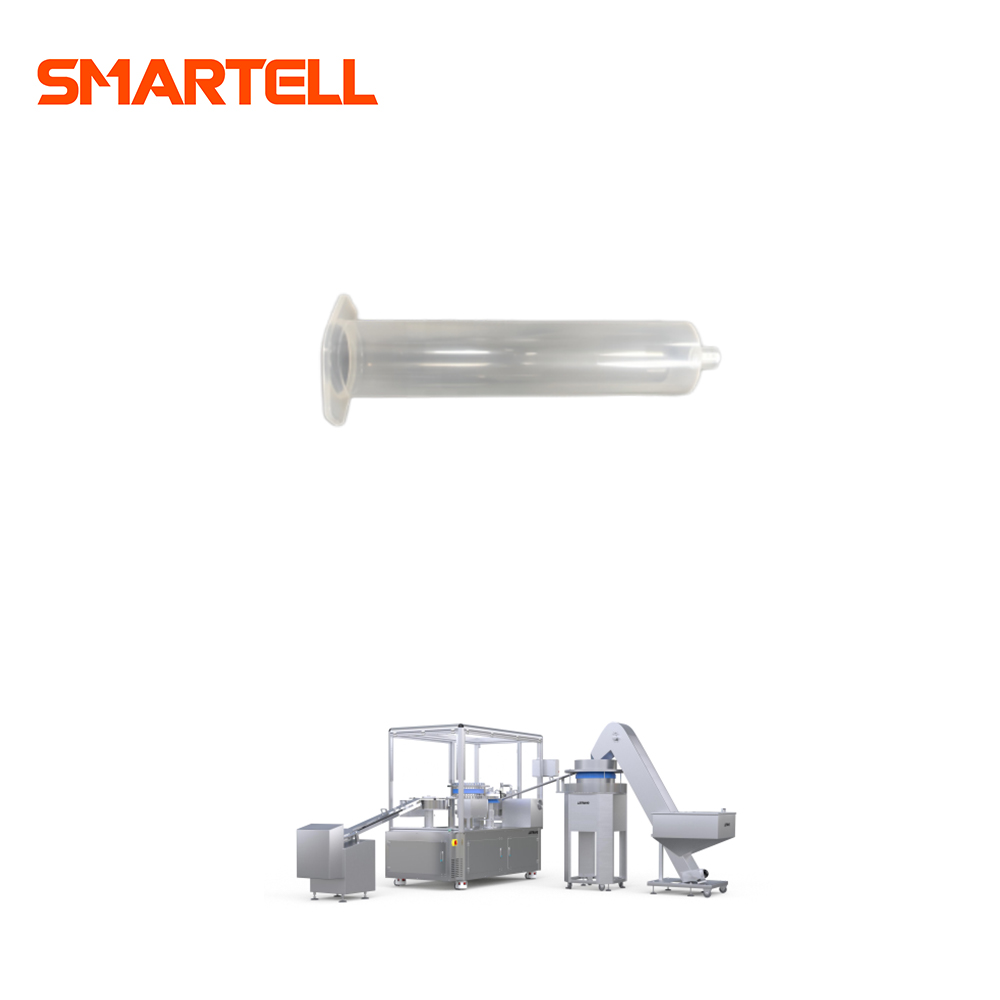
A rotary screen mechanism synchronizes linear and rotational movement. The cylindrical barrel rotates on its axis. The screen moves linearly across the part. A squeegee forces ink through a finely woven mesh stencil. This deposits a precise image directly onto the curved surface.
Thick Ink Deposit: It delivers highly opaque marks. The contrast looks sharp and vibrant on clear or frosted barrels. Thick ink ensures effortless reading by medical staff.
Full Wrap Capabilities: You easily achieve continuous 360-degree coverage. You can process multi-axis scale marks in a single pass. Syringe silk screen printing handles wrap-around warning texts flawlessly.
Massive Throughput: Purpose-built machines hit extreme speeds. They achieve exceptionally high units-per-minute (UPM). This technology remains the undisputed industry standard for mass-market disposables.
Higher Tooling Expenses: You must fabricate custom screens for every design. Stretching mesh and applying emulsion takes specialized labor.
Longer Changeover Times: Switching between different barrel sizes requires significant downtime. Operators must swap screens and squeegees. They also need to recalibrate complex holding fixtures carefully.
This relies on an indirect photogravure process. We etch a 2D image into a metal or polymer cliché plate. The plate fills entirely with ink. A soft, deformable silicone pad picks up the image. It then presses the print firmly onto the 3D barrel.
Micro-Precision: It prints incredibly fine text without distortion. It easily handles CE marks and regulatory symbols. You can achieve flawless syringe logo printing. The ink rarely bleeds over the edges.
Geometric Forgiveness: The flexible silicone pad conforms beautifully. It adapts to slight surface irregularities easily. It wraps over subtle tapers and contoured flanges. Rigid screens often struggle here.
Agile Production: Cliché plate etching moves fast. Setup procedures are significantly quicker. This agility helps multi-SKU facilities immensely. A syringe pad printing machine perfectly suits specialized or short-run medical applications.
Thinner Ink Deposits: The silicone pad transfers less ink. You might need multiple hits to achieve strong opacity. Double passes slow down your overall production speed.
Wrap Restrictions: Achieving a true, seamless 360-degree wrap is difficult. Operators must roll the part mechanically. Registering multiple hits often risks slight misalignments.
Buyers need a direct comparison framework before purchasing new equipment. You must assess how each machine architecture performs under real-world factory conditions.
Screen printing wins for uninterrupted runs. It handles single-SKU batches perfectly over long shifts. Pad printing wins for high-mix scenarios. It suits low-volume or custom runs better. Cliché swaps happen rapidly compared to screen alignments.
Screen mesh degrades gradually over time. You must replace the stencil regularly to maintain sharp edges. Pad printing requires frequent new silicone pads. Harsh solvents cause rapid pad swelling and mechanical wear. Etched clichés also wear out after millions of impressions. Daily operator maintenance dictates long-term efficiency for both platforms.
Both methods integrate easily into large production lines. You can connect automated centrifugal bowl feeders directly. Flame or corona pre-treatment stations link seamlessly upstream. UV-LED curing tunnels fit perfectly downstream. Screen systems generally offer more robust continuous-feed architectures. They handle standard cylindrical parts at much higher velocities.
| Engineering Metric | Rotary Silk Screen | Pad Printing |
|---|---|---|
| Optimal Run Length | Millions of identical units | Short to medium multi-SKU batches |
| Ink Deposit Thickness | 10 - 30 microns (High Opacity) | 2 - 4 microns (Lower Opacity) |
| Changeover Agility | Slow (Requires screen/fixture swaps) | Fast (Quick cliché/pad swaps) |
| Surface Flexibility | Requires perfectly uniform cylinders | Forgiving on tapers and slight curves |
Deploying new marking equipment introduces specific risks. We often see common failure points during initial rollouts. You must anticipate these issues to avoid severe production bottlenecks.
Never skip surface energy testing. Perform dyne level checks daily before printing begins. Failing to test leads directly to disastrous adhesion issues. The standard QA tape-test will strip the ink clean off the plastic. Ensure your corona or flame stations operate at correct voltages and gas mixtures.
Pad printing inks show high sensitivity to factory conditions. Humidity impacts them heavily during open-air transfers. Temperature fluctuations alter solvent evaporation rates inside the ink cup. Poor climate control causes the ink to dry too quickly. This results in sticky pads and incomplete image transfers.
Multi-color printing demands extreme mechanical caution. You might print black measurement scales and red warning texts. Mechanical vibrations cause micro-misalignments over long shifts. These tiny shifts ruin compliance tolerances rapidly. We strongly recommend installing inline vision inspection systems. Automated cameras catch scale spacing errors instantly.
The final decision rests on matching machine capabilities to your exact production geometry. Review your volume requirements and daily changeover frequency closely.
Choose Rotary Silk Screen Printing if:
Your facility produces standardized barrels in the millions.
You require extremely thick, highly visible ink layers.
The product demands full 360-degree continuous wrap coverage.
Downtime for tooling changeovers remains minimal due to low SKU variance.
Choose a Syringe Pad Printing Machine if:
You print on complex cylinders or specialty contoured vaccine devices.
Your operations require ultra-fine micro-text or highly detailed brand logos.
You run a high-mix production line facing constant daily schedule changes.
Your team requires frequent, fast mechanical changeovers between batches.
The choice between pad and screen printing is rarely about which technology is objectively better. Instead, it involves aligning equipment capabilities to your specific geometry and volume demands. High-volume, standardized runs always favor rotary screen methods. High-mix, precision-focused runs strongly favor pad printing architecture. Evaluate your daily changeover frequency carefully before making a capital investment.
We advise buyers to request physical sample printing first. Always test your actual molded substrates. Insist on using validated medical-grade inks during trials. You must review real-time cycle demonstrations to verify throughput claims. Secure these empirical performance guarantees before you issue a final RFP.
A: Generally, no. Pad printing transfers a much thinner ink layer. It typically deposits roughly 2 to 4 microns. Screen printing deposits between 10 and 30 microns. To achieve similar opacity, pad printers require a programmed double hit. This extra pass halves your overall production speed.
A: Most industrial-grade machines integrate curing directly. They connect seamlessly to UV-LED or thermal drying stations inline. The curing unit choice depends entirely on your specific ink chemistry. You must validate the curing method for your specific plastic material.
A: Compliance requires multiple coordinated steps. You must combine precise machine calibration and validated Class VI inks. Proper substrate pre-treatment remains strictly required. Finally, you should install automated optical inspection cameras inline. These cameras verify scale spacing and text legibility continuously in real time.