| Availability: | |
|---|---|
| Quantity: | |
SMT-3401
Smartell
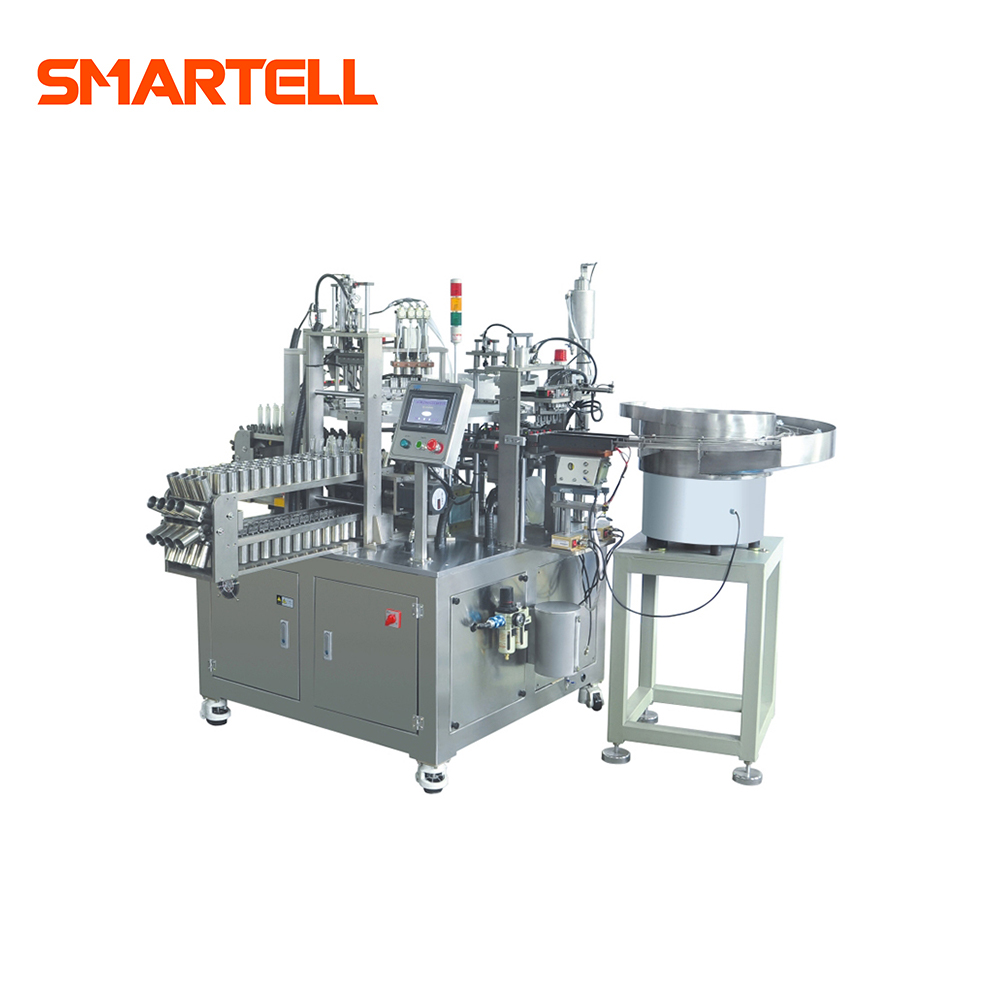
Spike Needle Assembly Machine
Technical Specification
Output | 3500-4000 set /h |
Operation of worker | 1 operator |
Dimension | 3500 x 2500 x 1700 mm |
Power | AC220V/ 3.0kw |
Air pressure | 0.4-0.5Mpa |
All parameters and dimensions are subject to change without prior notice.


Spike Needle Assembly Machine
Technical Specification
Output | 3500-4000 set /h |
Operation of worker | 1 operator |
Dimension | 3500 x 2500 x 1700 mm |
Power | AC220V/ 3.0kw |
Air pressure | 0.4-0.5Mpa |
All parameters and dimensions are subject to change without prior notice.


The Stability Factor: Reliability in Long-Term Operations
Manufacturing medical devices requires equipment that not only performs well but also maintains well-stability over time. Stability is crucial, especially in high-volume production settings where consistent operation is expected over long periods. The Spike Needle Assembly Machine is engineered to operate with minimal disruption, thanks to its durable components and advanced control systems.
This stability ensures that manufacturers can rely on the machine to perform at peak efficiency without experiencing frequent breakdowns or maintenance issues. In the medical device industry, where uptime is critical, such reliability helps to maintain high levels of productivity and prevents costly delays in production.
One of the major advantages of automating the spike needle assembly process is the reduction in material waste. The Spike Needle Assembly Machine is designed with precision in mind, ensuring that the exact amount of material is used for each assembly step. This helps to optimize the usage of raw materials such as plastic, air plugs, and membranes.
In traditional manual assembly processes, material waste can occur due to human error, such as misplacement or inaccurate measurements. However, with automation, each component is precisely positioned and secured, which drastically reduces the chances of waste. Over time, this material efficiency leads to significant cost savings, particularly when producing large volumes of spike needles.
The Stability Factor: Reliability in Long-Term Operations
Manufacturing medical devices requires equipment that not only performs well but also maintains well-stability over time. Stability is crucial, especially in high-volume production settings where consistent operation is expected over long periods. The Spike Needle Assembly Machine is engineered to operate with minimal disruption, thanks to its durable components and advanced control systems.
This stability ensures that manufacturers can rely on the machine to perform at peak efficiency without experiencing frequent breakdowns or maintenance issues. In the medical device industry, where uptime is critical, such reliability helps to maintain high levels of productivity and prevents costly delays in production.
One of the major advantages of automating the spike needle assembly process is the reduction in material waste. The Spike Needle Assembly Machine is designed with precision in mind, ensuring that the exact amount of material is used for each assembly step. This helps to optimize the usage of raw materials such as plastic, air plugs, and membranes.
In traditional manual assembly processes, material waste can occur due to human error, such as misplacement or inaccurate measurements. However, with automation, each component is precisely positioned and secured, which drastically reduces the chances of waste. Over time, this material efficiency leads to significant cost savings, particularly when producing large volumes of spike needles.