
Views: 0 Author: Site Editor Publish Time: 2026-09-16 Origin: Site

High-volume medical manufacturing faces a critical bottleneck during the assembly of the IV set spike. Manual or semi-automated processes often lead to inconsistent gluing, flow blockages, and unacceptable reject rates. You cannot scale production effectively using outdated methods. Quality control suffers under human fatigue. Defective fluid pathways pose severe risks to patient safety.
Transitioning to a fully automated spike needle assembly machine represents the definitive step forward. Automation scales output reliably. It ensures airtight seals consistently. It maintains strict cleanroom compliance without interruption. Modern manufacturing demands this level of precision and repeatability.
This guide provides plant managers and procurement engineers with a strictly evidence-based framework. You will learn how to evaluate machine capacity correctly. We explore integration readiness and seamless line handoffs. We outline quality control standards necessary before initiating an RFQ. You will gain actionable insights for optimizing your assembly process.
Throughput Benchmarks: Top-tier machines reliably output 6,000 to 12,000 parts per hour, but real-world Overall Equipment Effectiveness (OEE) dictates actual yield.
Crucial Evaluation Metrics: Machine selection must prioritize in-line CCD vision inspection, precision UV curing, and modularity for different spike designs.
Implementation Reality: Seamless integration into broader infusion set production lines requires rigorous Factory Acceptance Testing (FAT) and an evaluation of vendor changeover protocols.
Risk Mitigation: The highest hidden costs stem from poor automated feeding mechanisms and inadequate spare part availability, not the initial capital expenditure.
Vendors often advertise machine speeds using pieces per minute (PPM). These numbers highlight theoretical maximums. However, continuous production yields tell a different story entirely. You typically experience a 10-15% operational drop-off during daily runs. Material feeding pauses cause minor delays. Preventative maintenance requires machine shutdowns. These factors create a gap between theoretical speed and actual yield.
You must evaluate the core drive mechanisms carefully. An automatic assembly machine generally uses either an indexing dial or a linear track system. Rotary dials offer excellent positional accuracy. They handle complex micro-assembly steps perfectly. Linear track systems often support higher overall speeds. They manage larger bulk feeds efficiently. Your choice depends on your specific product complexity.
Real-world return on investment depends heavily on Overall Equipment Effectiveness (OEE). Micro-stoppages destroy efficiency much faster than planned downtimes. You must track reject rates closely. A fast machine producing high rejects wastes expensive raw materials.
| System Architecture | Speed Capability | Positional Accuracy | Ideal Application |
|---|---|---|---|
| Indexing Dial (Rotary) | Moderate to High | Exceptional | Complex micro-assembly steps |
| Linear Track System | Very High | Good | High-volume continuous feeding |
Schedule preventative maintenance during shift changes.
Calibrate vibratory feeder bowls weekly.
Train operators to resolve micro-stoppages under 30 seconds.
Vibratory bowl feeding systems act as the heartbeat of the machine. Customized bowl feeders sort components gently. They orient parts correctly before assembly. Precision bowls prevent jamming. They protect the delicate IV set spike needle from scratching. They keep plastic caps pristine. Surface scratches often cause rejection downstream.
Precision dispensing directly guarantees leak-free outcomes. You need specialized micro-dosing valves. They apply exact glue amounts consistently. Glue overflow blocks the internal fluid pathway. This causes catastrophic product failure. Instantaneous UV curing sets the adhesive immediately. The bond solidifies in milliseconds. This stops unwanted fluid migration completely.
Force and torque testing validates the final assembly. The system grips components securely. Automated stations apply precise pull-force metrics. They test the physical bond strength. The equipment also measures torque continuously. It ensures secure attachment. The machine performs these checks gently. It avoids cracking the delicate plastic housing.
Using generic feeder bowls instead of custom-tooled designs.
Relying on thermal curing instead of instantaneous UV curing.
Skipping automated pull-force validation stations.
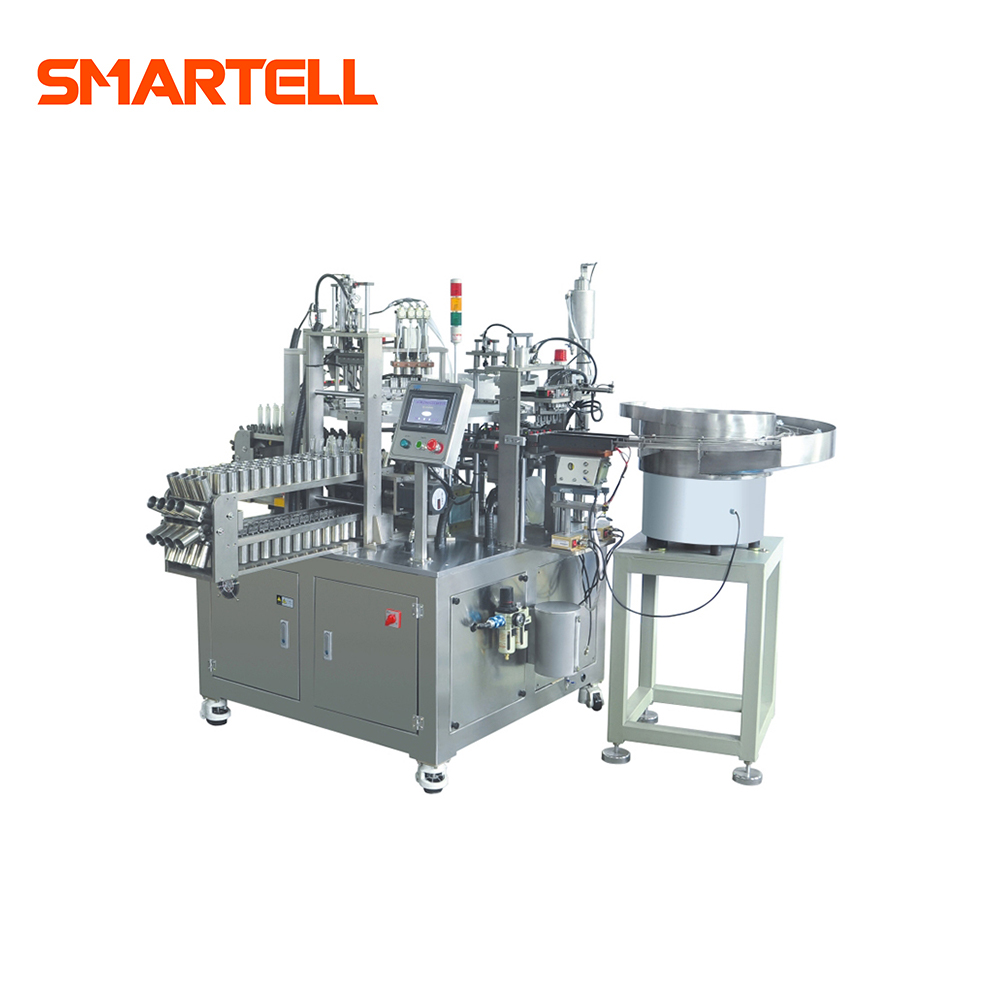
In-line vision systems lead modern quality control efforts. Advanced machine vision validates spike needle assembling instantly. High-resolution CCD cameras scan every single unit. The software checks multiple parameters simultaneously. It looks for bent needles. It verifies air vent presence. It detects structural micro-fractures. Defective units drop into a reject bin automatically. This guarantees zero defects enter the accepted batch.
Cleanroom compliance demands specific engineering standards. You must operate these machines inside ISO Class 7 or 8 cleanrooms. The equipment requires 304 or 316L stainless steel enclosures. Enclosures prevent dangerous particle generation. Pneumatic cylinders must follow strict GMP guidelines. Exhaust air requires specialized HEPA filtration. You must contain all particulates effectively.
Data logging ensures complete audit readiness. Programmable Logic Controllers (PLC) manage the production data. They record every assembly metric automatically. CFR 21 Part 11 compliance requires strict electronic records. You maintain perfect batch traceability always. Medical device auditors demand this rigorous level of data retention.
Upstream and downstream handoffs require careful engineering. Physical connections must align perfectly on the factory floor. Software systems must communicate constantly. Upstream processes often include injection molding stations. Downstream processes include tube cutting and coiling. Packaging happens last. You must synchronize data transfer across your infusion set production line.
Weigh turnkey versus standalone operations carefully. A standalone module seems simpler initially. However, integration risks escalate quickly. You face hardware compatibility issues. You struggle linking different software platforms. Investing in a synchronized disposable IV set machine line lowers this risk. A single vendor provides a unified platform. Modules share a single control architecture.
Footprint and utility requirements dictate plant layout decisions. You must verify floor space availability early. Automated machines require substantial room. Maintenance teams need clearance around the equipment. Evaluate your compressed air stability thoroughly. Fluctuating pressure causes sudden pneumatic failures. Analyze power consumption profiles immediately. Ensure your facility provides stable voltage continuously.
Changeover complexity routinely ruins production schedules. Medical device factories handle many product variants daily. Operators run vented and non-vented models. They assemble steel needles. They process plastic spikes. Switching between these requires physical tooling changes. It demands software program updates. Long changeover times destroy your OEE. You must demand quick-change tooling from equipment vendors.
Wear and tear parts present dangerous hidden risks. High-friction components degrade over time. Grippers wear down visibly. Dispensing nozzles clog frequently. Rubber O-rings lose elasticity. You must evaluate spare part availability carefully. Relying on proprietary vendor parts causes delays. International shipping takes weeks. Commercially available off-the-shelf (COTS) parts remain much safer. You can source COTS parts locally.
Avoid the trap of cheap machines entirely. Low-capex equipment looks attractive on spreadsheets initially. However, reality proves different on the factory floor. Cheap frames cause vibrations. Vibrations lead to misaligned assemblies. Flimsy feeders cause frequent component jamming. You lose hours clearing jams. Reject rates spike uncontrollably. You ultimately pay a higher cost per compliant unit.
Define your User Requirement Specification (URS) clearly. Do this before contacting suppliers. The URS serves as your critical baseline document. You document specific material types. You define the target pieces per minute (PPM). You specify the required cleanroom grade. Detailed requirements prevent costly vendor misunderstandings.
Establish strict FAT and SAT protocols next. Factory Acceptance Testing happens at the vendor facility. Site Acceptance Testing occurs on your floor. Both protocols require non-negotiable testing criteria. You must run actual production samples. You verify the promised OEE. You test the vision system reject accuracy. Never skip these validation steps.
Evaluate the vendor support matrix thoroughly. Supplier credibility determines your long-term success. Assess their response times and expertise transparently.
Local Technician Availability: Can they dispatch engineers within 24 hours to your facility?
Operator Training: Do they provide comprehensive curriculum and hands-on guidance?
Spare Parts Depot: Is there a regional hub for critical replacements?
Warranty Coverage: Does it cover wear items or just structural defects?
High-performance assembly automation acts as a strategic investment in process security. It guarantees output scalability significantly. It serves as far more than just a simple mechanical upgrade. Reliable machines protect your brand reputation by eliminating defective fluid pathways.
Finalize your URS document immediately. Gather physical sample components next. Send these samples for rigorous vendor feasibility testing. Initiate a structured RFQ process. Focus your evaluation heavily on OEE guarantees and advanced vision-inspection capabilities.
A: Typically, it ranges from 3 to 6 months. This depends heavily on customization requirements. The complexity of the Factory Acceptance Testing (FAT) also impacts delivery schedules.
A: Yes. Modern equipment uses modular tooling and programmable changeovers. However, you must verify the exact changeover time with the manufacturer to avoid unexpected production delays.
A: The system uses a combination of technologies. High-resolution CCD cameras check for external glue overflow. Automated air-flow and pressure decay testing stations verify internal clearance prior to final ejection.
A: High-volume manufacturers generally see returns in 12 to 18 months. Reduced labor costs drive this rapid payback. Near-zero defective batches also contribute significantly to the quick timeline.